
- Are all cryptocurrencies based on blockchain
- Why do all cryptocurrencies rise and fall together
- All the cryptocurrencies
Do all cryptocurrencies use blockchain
Mining pools are groups of miners who pool their resources (hash power) to increase their chances of winning block rewards. When the pool successfully finds a block, the miners in the pool share the reward according to the amount of work they each contributed https://leovegas-au.org/.
In addition to hashing and listing each transaction individually, the miner also adds a custom transaction, in which they send themselves the block reward. This transaction is called the coinbase transaction and is what creates brand-new coins. In most cases, this transaction is the first to be recorded in a new block, followed by a group of pending transactions awaiting confirmation.
In addition to electricity costs, massive mining farms may need to spend quite a bit of money on new equipment, which can go obsolete in a matter of months. Similarly, large mining farms may require cooling systems, since servers and graphics processing units can generate a lot of heat.
Of course, there are fail-safes built in that prevent larger stakeholders from dominating the validation process. There are a host of randomized ways that stakeholders can be chosen to proof transactions, which ensures that smaller stakeholders always have a chance.

Are all cryptocurrencies based on blockchain
Although blockchain announcements are less frequent and happen with less fanfare than they did a few years ago, blockchain technology has the potential to result in a radically different competitive future.
Using blockchain in the financial industry can make transactions more efficient. Visa has shown the efficacy and potential of blockchain technology for mainstream use since adopting it for international business payments in 2017.
Cryptocurrency is available as coins or tokens. The difference between them is that tokens are assets that exist on an existing blockchain network, while coins can be virtual, digital, or tangible. Coins are more like traditional money—a digital coin has its own blockchain. Conversely, since tokens are created on an existing blockchain, you can use them as currency or as a representation of asset ownership.
Crypto exchanges, such as those for Bitcoin and Ethereum, are the most common use case for blockchain technology, providing a secure and transparent system for processing and recording transactions. This technology ensures the integrity and accuracy of cryptocurrency transactions, making them resistant to fraud and hacking attempts.
Blockchain is far more than just a foundation for cryptocurrencies; it is a versatile technology with applications across numerous industries. While its initial and most famous use case was to power digital currencies like Bitcoin, blockchain’s potential extends well beyond the realm of finance. Its decentralized, secure, and transparent nature makes it ideal for a variety of applications, such as supply chain management, where it can track the provenance and movement of goods, ensuring authenticity and reducing fraud. In healthcare, blockchain can securely store and share patient records, enhancing privacy and interoperability. Additionally, it can streamline operations in sectors like real estate, voting systems, and intellectual property management by providing a reliable and tamper-proof record of transactions and ownership. Thus, blockchain’s capabilities are being harnessed to innovate and solve challenges across diverse fields, demonstrating its transformative potential beyond just cryptocurrency.
Why do all cryptocurrencies rise and fall together
The crypto market today is witnessing a significant surge, with the global crypto market cap reaching $3.26 trillion, marking a 1.53% increase in the last 24 hours. Trading volumes have also spiked, with the total market volume hitting $96.96 billion—an 18.02% rise. This upswing has sparked interest and led many to ask, “Why is crypto going up today?”
Solana (SOL) has also shown strong performance, trading at $178.15 with a 2.23% increase and a market cap of $87.02 billion. These gains across top cryptocurrencies answer the pressing question, “Why is crypto market going up?”
One of the most common beginner questions regarding cryptocurrencies is, “Why does crypto go up and down?” This question is another way of asking how the value of cryptocurrencies is determined, and the answer is supply and demand.
For example, it’s estimated that Bitcoin and Ethereum had a 82% correlation in a 40-day rolling window ending in 2023. This means that the price of the two cryptocurrencies have a strong relationship with each other — even though they are designed for very different purposes!
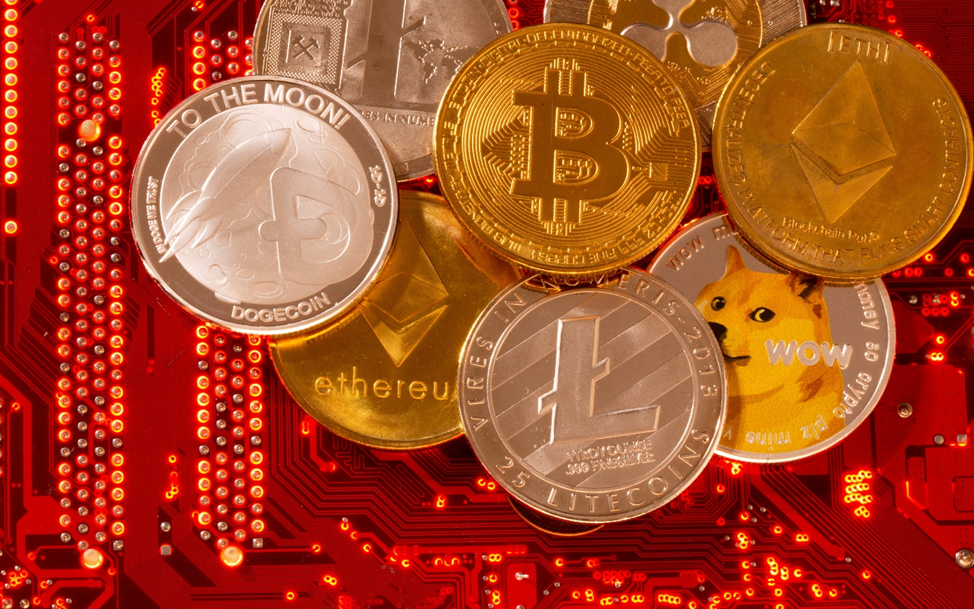
The crypto market today is witnessing a significant surge, with the global crypto market cap reaching $3.26 trillion, marking a 1.53% increase in the last 24 hours. Trading volumes have also spiked, with the total market volume hitting $96.96 billion—an 18.02% rise. This upswing has sparked interest and led many to ask, “Why is crypto going up today?”
Solana (SOL) has also shown strong performance, trading at $178.15 with a 2.23% increase and a market cap of $87.02 billion. These gains across top cryptocurrencies answer the pressing question, “Why is crypto market going up?”
All the cryptocurrencies
These crypto coins have their own blockchains which use proof of work mining or proof of stake in some form. They are listed with the largest coin by market capitalization first and then in descending order. To reorder the list, just click on one of the column headers, for example, 7d, and the list will be reordered to show the highest or lowest coins first.
On the other hand, tokens are digital assets that are not native to a particular blockchain but are created on existing blockchain platforms, typically through tokenization. Tokens can represent various types of assets, such as utility tokens, security tokens, or non-fungible tokens (NFTs). They can be easily created using templates, where developers specify parameters like initial supply, number of decimals, and other metadata. Most tokens are created on established blockchain networks like Ethereum, using standards such as ERC-20 for fungible tokens and ERC-721 for non-fungible tokens.
In January 2024 the SEC approved 11 exchange traded funds to invest in Bitcoin. There were already a number of Bitcoin ETFs available in other countries, but this change allowed them to be available to retail investors in the United States. This opens the way for a much wider range of investors to be able to add some exposure to cryptocurrency in their portfolios.
Currently, there is no direct option to download the complete list of cryptocurrencies in Excel format. Nevertheless, we encourage you to contact us using our contact form at so we can discuss alternative options and tailor a solution to fit your requirements.
Each of our coin data pages has a graph that shows both the current and historic price information for the coin or token. Normally, the graph starts at the launch of the asset, but it is possible to select specific to and from dates to customize the chart to your own needs. These charts and their information are free to visitors of our website. The most experienced and professional traders often choose to use the best crypto API on the market. Our API enables millions of calls to track current prices and to also investigate historic prices and is used by some of the largest crypto exchanges and financial institutions in the world. CoinMarketCap also provides data about the most successful traders for you to monitor. We also provide data about the latest trending cryptos and trending DEX pairs.